Paper Flower Wedding Bouquet: Planning, Flowers and Timeline
How to plan a paper flower wedding bouquet: the decisions to make first, which flowers to choose, a working timeline and how to protect it on the day.
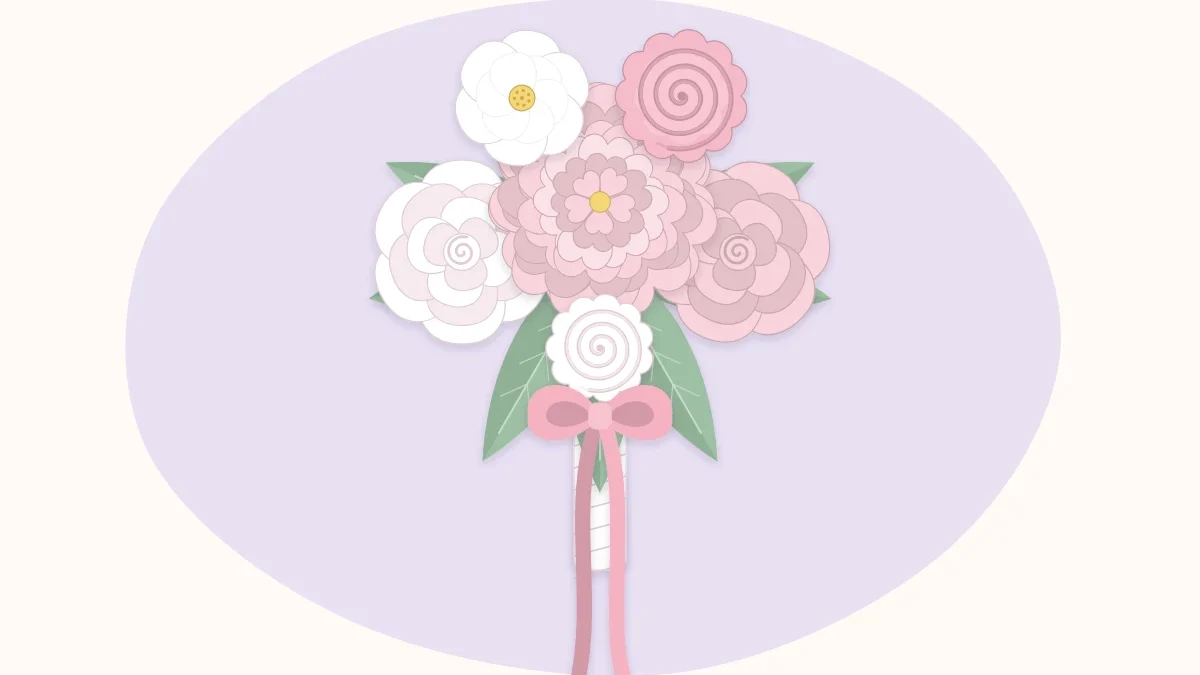
A paper flower wedding bouquet can be finished weeks ahead, will not wilt during a long day and can be kept afterward. The trade-off is time: a bridal bouquet needs more flowers, neater finishing and more planning than an everyday one. The sections below cover the decisions to make first, flowers that suit the job, a working timeline and how to get the bouquet safely through the day.
Four decisions to make before cutting any paper
1. Size and shape
A round, hand-tied bouquet is the most forgiving shape for paper and the easiest to carry. As a starting point, a bridal bouquet is often 9 to 11 inches (23 to 28 cm) across and bridesmaid bouquets 6 to 7 inches (15 to 18 cm). Trailing or cascading shapes are possible but need wired stems of different lengths and more practice.
2. Palette
Pick two or three flower colors plus green. All-white bouquets photograph as one pale shape unless the whites vary, so mix white, ivory and a hint of blush, and rely on petal shape and shadow for detail. Hold paper samples against the dress fabric in daylight before buying in quantity.
3. Paper
Heavy crepe paper, around 160 to 180 gsm, gives soft, realistic petals and survives handling. Cardstock, around 65 lb, gives a crisp, graphic look and is faster to cut, but the finished bouquet is heavier. Mixing both in one bouquet tends to look unplanned; choosing one keeps it coherent.
4. Who is making it
Count the pieces honestly: one bridal bouquet, any bridesmaid bouquets, boutonnieres, perhaps a flower for a cake table. If the total feels large, shrink the bouquets or share the cutting with helpers. Cutting petals is easy to hand off; assembly is best kept to one person so the flowers match.
Flowers that suit a wedding bouquet
| Flower | Role | Why it works | Effort |
|---|---|---|---|
| Peony | Focal | Large, ruffled, fills space quickly | High per flower, but few are needed |
| Rose | Focal or secondary | Familiar shape, works in every size | Medium |
| Rosebud or small rolled rose | Filler | Repeats the rose shape at a smaller scale | Low |
| Tulip | Accent | Smooth shape that contrasts with ruffles | Low to medium |
| Leaves and sprigs | Frame | Hide wire and soften the edge | Low |
A reliable combination is three to five large blooms, seven to nine medium ones and a generous handful of buds and leaves. The ruffled crepe paper peony and the crepe paper rose built petal by petal are natural starting points. Looking at photographs of real flowers helps with color and petal count; the RHS guide to roses shows how much real rose forms vary.
A working timeline
This schedule is a suggestion for someone crafting in evenings and weekends. Shift it earlier for a large wedding party or if the flowers are new to the maker.
| When | What to do |
|---|---|
| 10 to 12 weeks before | Decide size, palette and paper. Make one test flower of each type. |
| 8 to 10 weeks before | Buy all paper in one go so dye lots match. Add about 20 percent extra for mistakes. |
| 4 to 8 weeks before | Make flowers in batches: all petals for one flower type, then assemble. |
| 3 to 4 weeks before | Make leaves, buds, boutonnieres and a few spare flowers. |
| 2 weeks before | Assemble the bouquets. Hold a trial in front of a mirror, ideally with the dress or a photo of it. |
| 1 week before | Wrap handles, attach ribbon, fix anything loose. Box everything. |
| The day before | Check each piece, fluff petals, pack a small repair kit. |
Building the bridal bouquet
The method is the same spiral build used for any hand-tied paper flower bouquet, with a few wedding-specific points:
- Weight. The bouquet will be held for a long time. Use thinner wire for fillers and trim spare wire from the handle before binding.
- Handle. A handle of about 5 inches (13 cm), wrapped first in floral tape and then in ribbon, is comfortable and keeps wire ends away from hands and fabric. Run a finger over the base to check for sharp points.
- Ribbon tails. For long tails, cut two or three ribbons of 24 to 36 inches (60 to 90 cm), tie them at the top of the handle and trim the ends at an angle.
- Glue. Tacky craft glue dries clear and flexible. Hot glue is fast but can leave strings and shiny blobs that show in close photographs, and it burns skin.
- Back view. Guests see the bouquet from every side. Finish the underside with a collar of leaves so no tape or wire shows.
Matching pieces
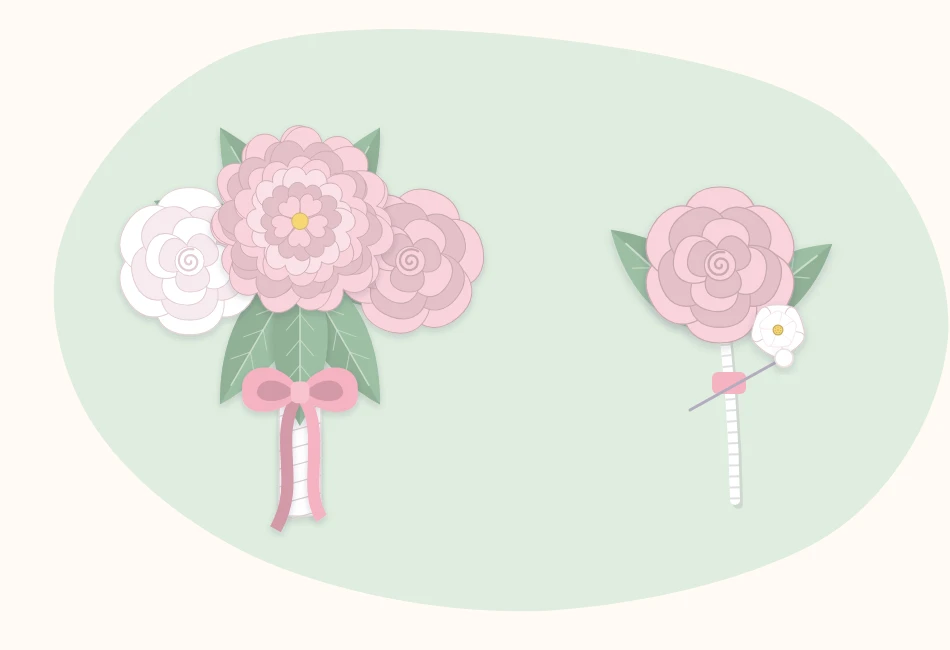
Bridesmaid bouquets look intentional when they repeat the bridal flowers at a smaller scale, for example one large bloom instead of five, in the same colors. A boutonniere needs only one small flower or bud, one leaf and a short stem of about 2.5 inches (6 cm), wrapped in tape and pinned from behind the lapel.
On the day
- Transport. Stand each bouquet upright in a box with the handle through a hole cut in a cardboard insert, so nothing rests on the petals.
- Moisture. Paper tolerates dry air well and water badly. Keep bouquets covered in rain and away from wet glasses and damp hands.
- Heat and flame. Do not leave bouquets in a hot car, where glue can soften, and keep them well away from candles.
- Repair kit. A small tube of tacky glue, a few spare petals, floral tape and two spare buds cover most accidents.
Tip
Make the spare flowers in the same session as the bouquet flowers. Spares made later from a new pack of paper may not match in shade.
Keeping the bouquet afterward
Stored out of sunlight and away from damp, a paper bouquet can last as a keepsake, although colored paper does fade over time. The guide to storing and caring for paper flowers covers boxes, dusting and display.
Frequently asked questions
How far ahead can a paper flower wedding bouquet be made?
Paper flowers do not wilt, so they can be made months ahead. A practical plan is to start the flowers 8 to 12 weeks before the wedding and assemble the bouquets about two weeks before, storing them boxed, dry and out of sunlight.
Which paper is best for a wedding bouquet?
Heavy crepe paper, around 160 to 180 gsm, gives soft, natural-looking petals and stands up to handling. Cardstock gives a crisp, graphic look and is quicker to cut, but makes a heavier bouquet.
How many flowers does a bridal bouquet need?
As a starting point, a round bouquet 9 to 11 inches across uses three to five large blooms, seven to nine medium flowers and a generous handful of buds and leaves. The number changes with flower size.
Will a paper bouquet survive rain?
Paper does not cope well with water. Keep the bouquet covered or indoors in wet weather and carry a small repair kit with glue and spare petals.