Paper Flower Arrangements: How to Fill a Vase Well
Paper stems are light and thin, so they need weight and a grid to stand well. Here is how to choose a vase, place stems in order and fix common problems.
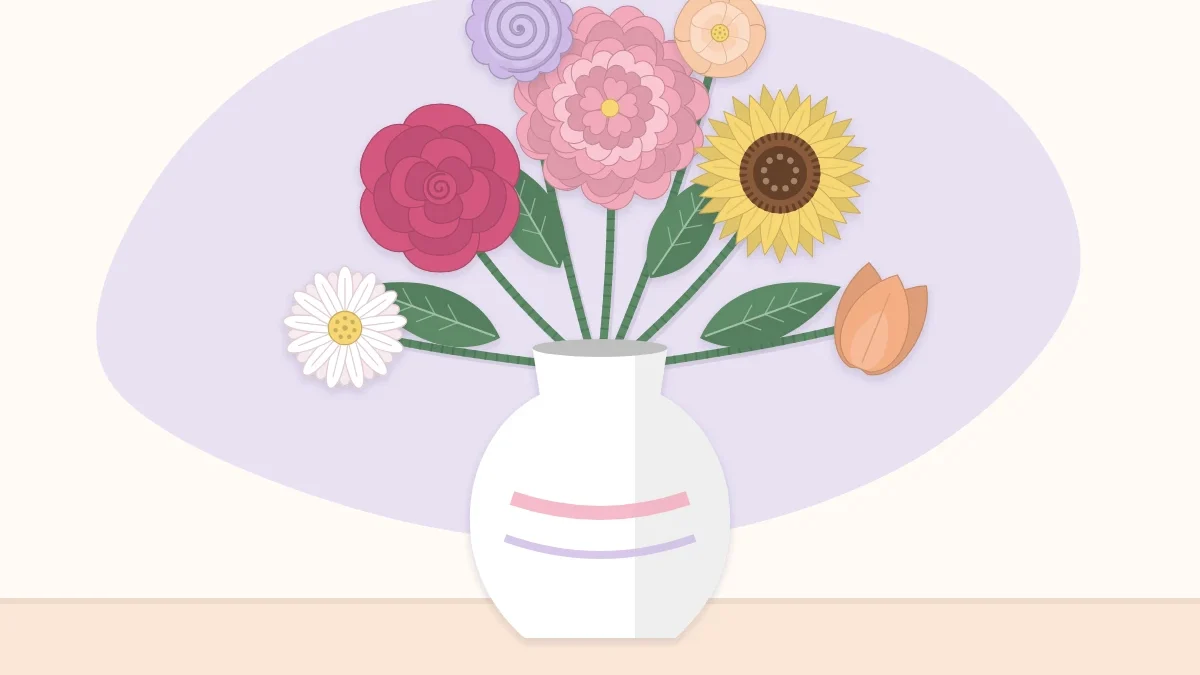
A paper flower arrangement looks right when the stems stay where they are placed, the heights vary, and the vase is neither half empty nor stuffed. Paper stems are thin, light and dry, so they slide and lean in ways fresh stems do not. Most of the work is giving them something to hold onto before a single flower goes in.
Why paper stems need help
A fresh arrangement relies on water for weight and on thick stems that wedge against each other. A paper arrangement has neither. A wire stem is a fraction of the width of a real one, so five stems in a wide vase simply fall to the rim. The flower heads are also heavier than the stems, which makes a light vase easy to tip. Two fixes solve nearly everything: add dry weight to the vase, and narrow the opening.
Match the vase to the stems
A widely used rule of thumb is that the tallest flower should stand about one and a half times the height of the vase. Treat the numbers below as starting points.
| Vase type | Suits | Tallest stem (starting point) | Note |
|---|---|---|---|
| Bud vase, narrow neck | 1 to 3 stems | About 10 in (25 cm) for a 6 in (15 cm) vase | No grid needed |
| Jar or cylinder | 7 to 12 stems | About 12 in (30 cm) for an 8 in (20 cm) vase | Needs a grid or filler |
| Pitcher or jug | 9 to 15 stems, loose style | About 14 in (35 cm) for a 9 in (23 cm) jug | Opaque, so filler stays hidden |
| Low bowl | Short, dense dome | About 6 in (15 cm) | Needs a firm base to push stems into |
If the stems are too short for the vase, there is no need to remake the flowers. A second wire can be taped alongside the first to lengthen it, as described in the guide to stems, wire and floral tape.
Prepare the vase
Add dry weight
Pour 1 to 2 inches (2.5 to 5 cm) of clean pebbles, glass beads or dry sand into the bottom. In an opaque vase, dry rice or dried beans work too. Never add water: it wicks up paper-wrapped stems, loosens floral tape and stains petals.
Make a tape grid
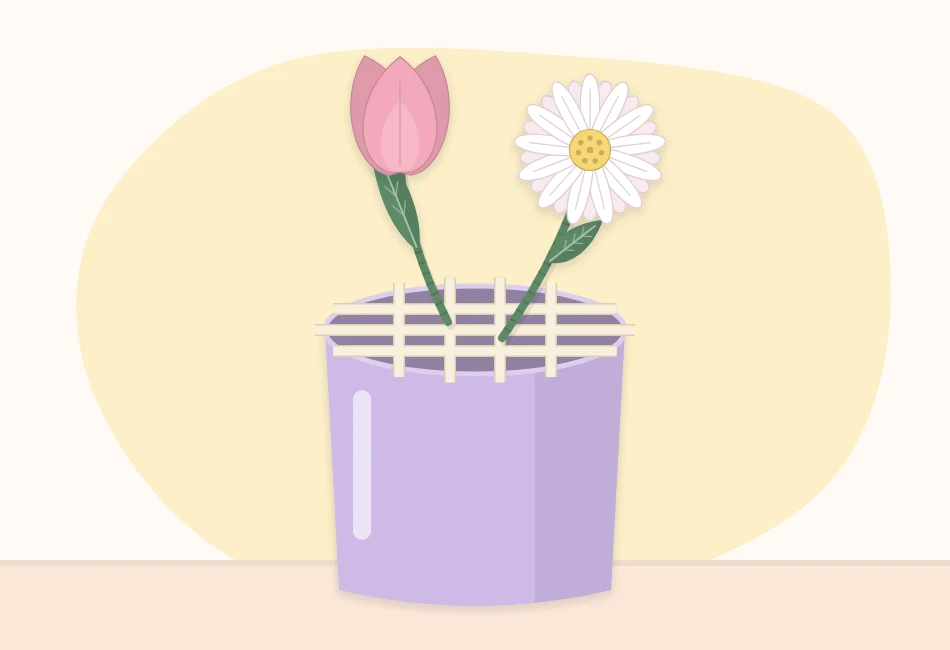
For clear vases with a wide mouth, run strips of narrow clear tape across the opening, three in one direction and three across them, to make a grid of small squares. A final strip around the outside of the rim holds the ends down. Each square supports one to three stems, so flowers can stand upright in the middle of the vase instead of leaning on the edge.
Other ways to hold stems
In an opaque container, a loosely crumpled ball of kraft paper pushed into the vase grips wire stems well. A block of dry floral foam cut to fit a low bowl gives the firmest hold, although stems leave holes, so plan each placement before pushing in.
Place the stems in order
- Set the height. Put the two or three tallest stems in the center squares of the grid. Slim, upright flowers do this job well; long-stemmed crepe paper tulips are a good example.
- Set the width. Add two or three stems that lean outward to the left and right, lower than the center. The outline should now look like a rough triangle or fan.
- Place the focal flowers. Put the largest, fullest blooms low and near the front, just above the rim. Large heads placed high make the arrangement look top-heavy.
- Fill the gaps. Tuck small flowers and buds between the larger ones at mixed heights. Let some sit deeper than their neighbors to create shadow and depth.
- Finish with leaves. Add leaves around the rim to hide tape, and one or two higher up to break up blocks of color.
- Bend, then step back. Wire stems can be curved after placing. Give a few a gentle arc so the flowers do not all stand at attention, then look at the result from across the room.
Tip
Turn the vase a quarter turn every few stems, even for an arrangement that will sit against a wall. It shows gaps that are invisible from the front.
Proportions that are easy to check
- Three heights. Tall, medium and low. If every head sits on one level, shorten some stems by pushing them deeper or trimming the wire.
- Odd numbers. Three or five of the same flower usually look more natural than two or four.
- Two or three colors. One main color, one supporting color and green is plenty for a small vase.
- Rim covered. A flower or leaf should break the line of the rim in at least two places.
- Vase visible. Roughly a third vase to two thirds flowers keeps the whole thing balanced.
Quick fixes
| If this happens | Do this |
|---|---|
| Stems fall to the sides | Add a grid, or tape three stems together below the rim so they stand as one |
| The vase tips over | Add more weight, or shorten the tallest stems |
| The middle looks empty | Add one full flower low in the center, not more tall stems |
| Everything faces forward stiffly | Turn a few heads sideways and bend one or two stems into a curve |
| Wire shows through clear glass | Wrap the lower stems in green floral tape, or line the vase with a rolled sheet of paper |
From bouquet to vase
A finished hand-tied bouquet can go straight into a vase with a narrow neck. Because the stems are already bound, it keeps its dome shape and needs no grid, only weight in the base.
Keeping the arrangement looking good
Stand the vase out of direct sun, which fades colored paper, and away from kitchens and bathrooms where steam softens petals. Dust gathers slowly on paper flowers; the article on storing and caring for paper flowers explains how to remove it without flattening the petals. Paper burns easily, so keep the arrangement well away from candles.
Frequently asked questions
How do you keep paper flowers upright in a vase?
Add dry weight such as pebbles or glass beads to the bottom of the vase and make a grid of clear tape across the opening. The grid gives each thin wire stem a small square to stand in.
Can water be added to a vase of paper flowers?
No. Water wicks up paper-covered stems, loosens floral tape and stains petals. Use dry filler for weight instead.
How tall should paper flowers be for a vase?
A common starting point is for the tallest flower to stand about one and a half times the height of the vase, with other stems stepping down from there.