How to Store and Care for Paper Flowers
Light, moisture, dust and pressure are what wear paper flowers out. Here is how to display, dust, pack and revive them so they keep their shape and color.
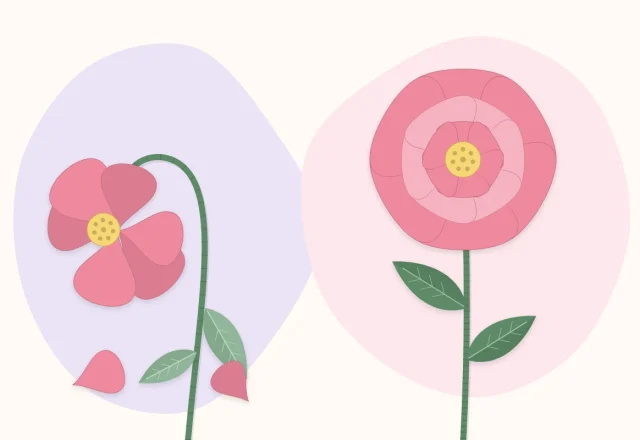
Paper flowers do not wilt, but they are not permanent either. Light fades the color, moisture relaxes the shaping, dust dulls the surface, and pressure flattens petals. Good care comes down to controlling those four things, both while the flowers are on display and when they are packed away between seasons.
What actually damages paper flowers
| Cause | What it does | How to limit it |
|---|---|---|
| Direct sunlight | Fades dyes, sometimes within one season on a sunny windowsill; can make paper brittle and yellow | Display away from windows; store in the dark |
| Humidity and damp | Curls relax, crepe loses its stretch, glue softens, mold can develop | Keep out of bathrooms, kitchens and basements |
| Dust | Settles into creases and crepe texture, graying light colors | Dust lightly and regularly; cover or box flowers not on display |
| Pressure | Flattens cupped petals and bends stems | Store with space around each bloom, never under weight |
| Heat | Softens hot glue and dries paper out | Keep away from radiators, heating vents and attics |
Fading is the one form of damage that cannot be undone, so light deserves the most attention. Dyed tissue and crepe are generally more sensitive than colored cardstock, and strong, saturated colors tend to show fading sooner than pale ones. The reasons are explained in the Library of Congress overview of why paper deteriorates, which applies to craft paper as much as to documents.
Caring for flowers on display
Choose the spot before choosing the vase. A shelf or wall that never gets direct sun, away from steam and cooking grease, will keep flowers looking good far longer than any protective product. Rotating an arrangement a quarter turn every few weeks evens out whatever light it does receive.
Keep paper flowers well away from candles, fireplaces and hot light bulbs. Paper is flammable, and a centerpiece that mixes paper blooms with open flame is not worth the risk; battery-powered candles give a similar effect safely.
How to dust paper flowers
- Support the bloom. Hold the flower by its stem or base, not by the petals, and tip it slightly so dust falls away from the center.
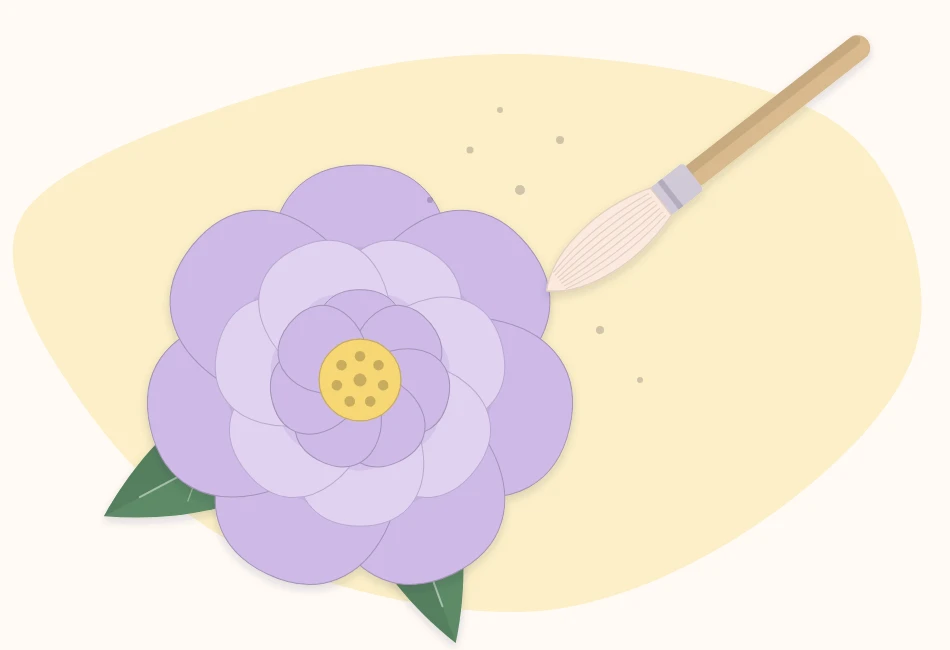
- Brush from the center outward. Use a soft, dry, clean brush, such as a makeup brush or a wide watercolor brush kept only for this job. Light strokes that follow each petal from base to tip lift dust without undoing the curl.
- Clear the deep folds with air. For tight centers and crepe ruffles, a hair dryer on its coolest, lowest setting held about 12 inches (30 cm) away, or a hand-squeezed air blower, moves dust that a brush cannot reach.
- Finish with the leaves and stem. These can take a firmer brush stroke.
Watch out
Never use water, a damp cloth or cleaning sprays. Moisture leaves tide marks, makes dyes bleed and collapses the shaping. Canned air held too close can also tear tissue and thin crepe.
Dusting every few weeks is easier than a deep clean once a year, because dust that sits for months works into the paper fibers and stops brushing off.
Packing paper flowers for storage
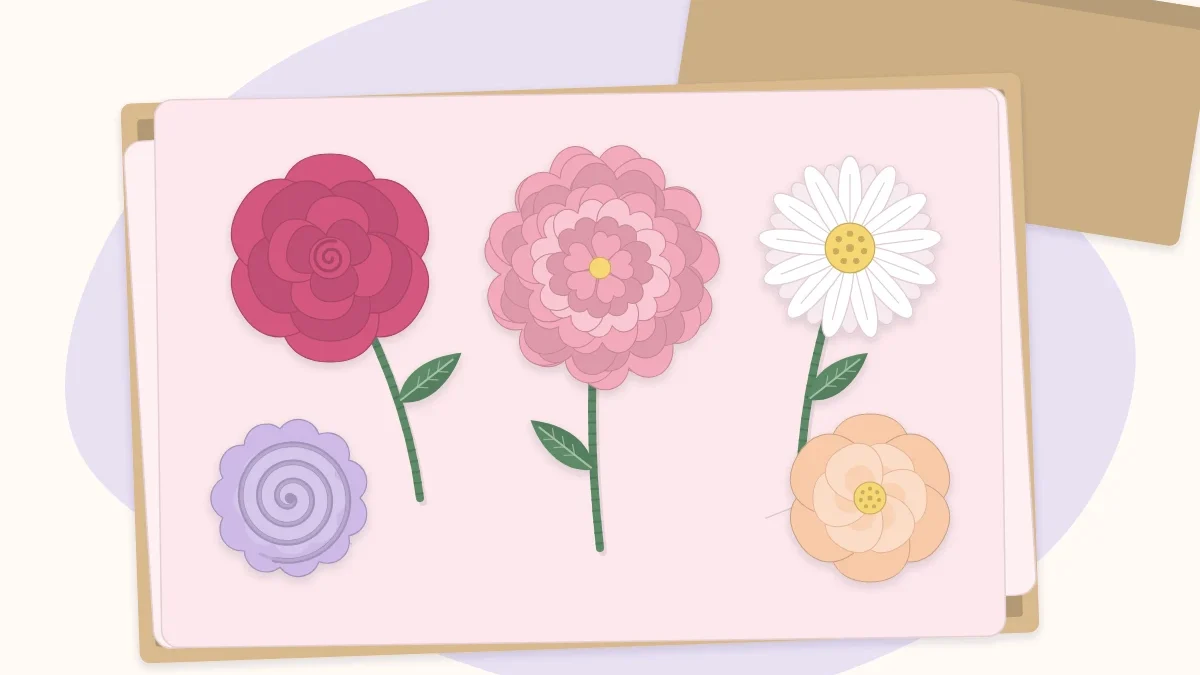
Seasonal pieces, a paper wedding bouquet kept as a keepsake and party decorations spend most of their life in a box, so the packing matters more than the display. The goal is a container that keeps out light and dust, does not trap moisture, and holds each flower still without squeezing it.
Storage checklist
- A rigid box with a lid. Sturdy cardboard is a good choice because it breathes a little. Clear plastic bins protect well from dust but let in light and can trap humidity, so keep them in a dark closet and make sure the flowers are completely dry first.
- Tissue for lining and padding. Plain white or acid-free tissue, lightly crumpled, cushions the blooms. Avoid colored tissue and newspaper, which can transfer dye or ink.
- One layer where possible. Lay flowers face up with crumpled tissue nests between them. If a second layer is unavoidable, put a sheet of cardboard between layers so no weight rests on the petals below.
- Stems secured. For stemmed flowers, lay them head to tail, or stand them upright by pushing the stems through holes in a cardboard insert so the heads hang free.
- A label on the outside. Note the contents and which way is up, so the box is not opened and rummaged through more than necessary.
Large flat-backed pieces need slightly different handling. Giant backdrop flowers store best lying on their backs in shallow boxes, one per box if space allows. A finished paper flower wreath can hang on a hook inside a closet under a loose cotton cover, or lie flat in a box deep enough that the lid does not touch the blooms.
Where to keep the box
An interior closet or the space under a bed is usually the best place in a home: cool, dry, dark and steady in temperature. Attics, garages and basements swing between hot, cold and damp, which is hard on both paper and glue. General advice from the paper conservation field points the same way, toward stable conditions and away from exterior walls and floors where damp collects.
Reviving flowers after storage
Some settling is normal. Most flowers can be freshened in a few minutes:
- Flattened cardstock petals: re-curl the tips over a pencil or skewer, supporting the petal base with a finger so the glue joint is not stressed.
- Crepe petals that have lost their cup: stretch the center of each petal gently with both thumbs. Heavy crepe can be reshaped several times; light crepe and tissue have less stretch left, so work gradually. The guide to shaping paper petals shows each of these moves.
- Bent stems: straighten wire with your fingers along its length rather than bending it back at one point, which weakens it.
- A loose petal: reattach it with a small dot of tacky glue on a toothpick and hold it until it grips.
Understanding how crepe paper stretches along its grain helps here, since a petal that is pulled in the wrong direction will tear instead of cupping.
How long will they last?
There is no fixed lifespan, because it depends on the paper, the dyes and above all the conditions. As a rough guide, flowers kept out of direct sun in a dry room and dusted now and then can stay presentable for years, while the same flowers on a bright windowsill may look tired after a single summer. Sealant sprays are sometimes suggested for extra protection; they can stiffen petals and may change the color or sheen, so test on a spare petal first and spray outdoors or in a well-ventilated space. For keepsakes such as wedding flowers, a closed display case or shadow box away from windows offers dust protection without any coating at all.
Frequently asked questions
How long do paper flowers last?
It depends on the paper, the dyes and the conditions. Kept out of direct sunlight in a dry room and dusted occasionally, paper flowers can stay presentable for years. In strong sun or damp air they fade or lose their shape much sooner.
Can paper flowers be cleaned with water?
No. Water and damp cloths leave marks, make dyes bleed and flatten the shaping. Use a soft dry brush, or a hair dryer on its coolest and lowest setting held well away from the flower.
Is it better to store paper flowers in plastic or cardboard?
A sturdy cardboard box with a lid suits most homes because it blocks light and lets a little air move. Plastic bins keep dust out well but can trap humidity and let light in, so they work best in a dark, dry closet with fully dry flowers.
Can faded paper flowers be restored?
Fading cannot be reversed. Flattened petals and bent stems can be reshaped, but lost color stays lost, which is why keeping flowers out of direct sun matters most.